Resonance: A Plague Tale Legacy Minoan Sphere Light Puzzle Guide
What Resonance: A Plague Tale Legacy officially confirms about Sophia's Minoan sphere and light manipulation, plus a practical puzzle observation checklist.
Updated · Official
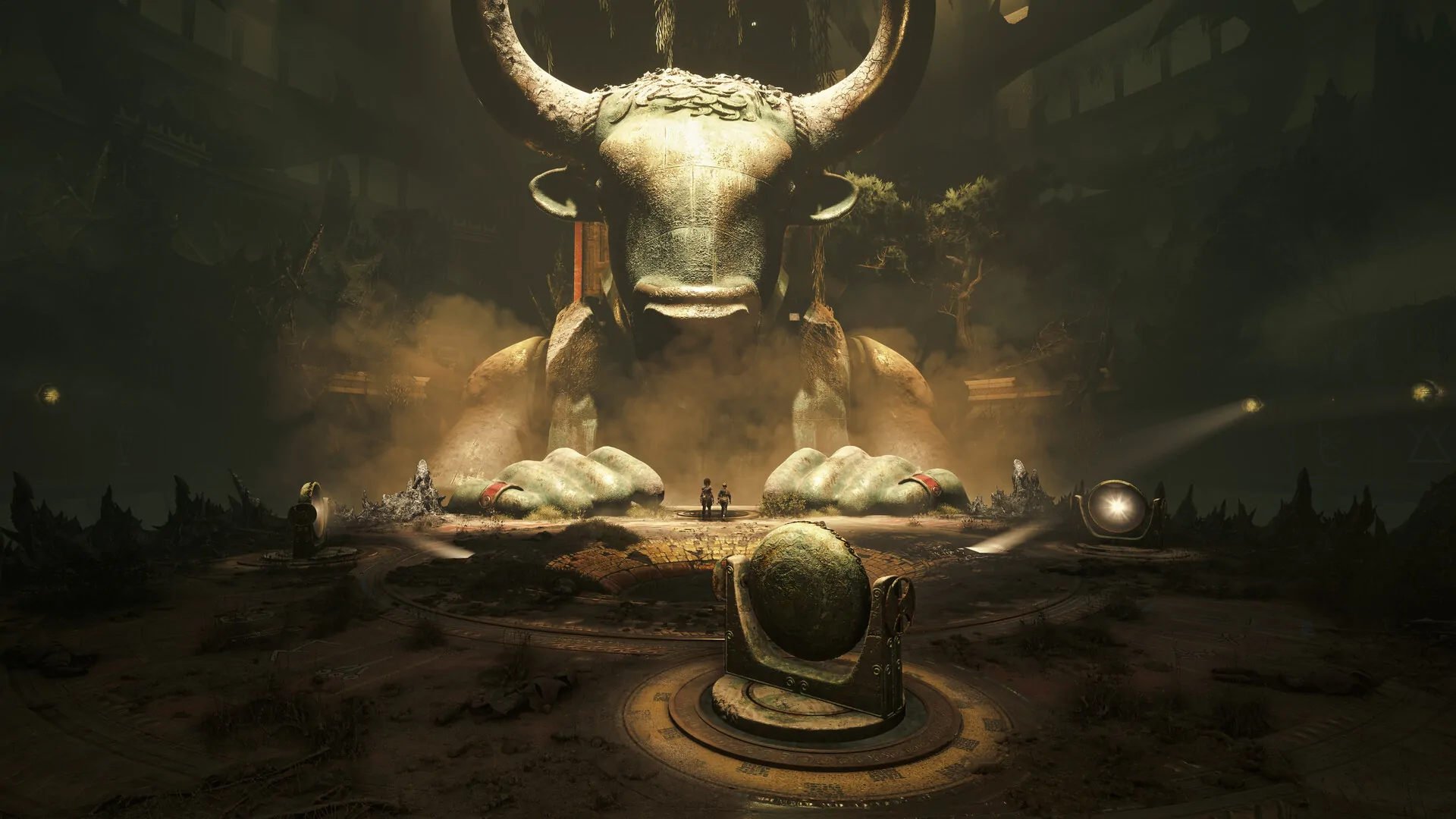
The Minoan sphere is the clearest new tool in Resonance: A Plague Tale Legacy. The official Steam description says Sophia steals the sphere and can use it to manipulate light, while the island’s myth describes Daedalus weaving light into its heart. That establishes the mechanic’s role without publishing a room-by-room solution list.
This guide is a spoiler-safe way to prepare for those rooms. It explains what is confirmed, what belongs to earlier-series context, and how to record a puzzle before committing to a dangerous route.
What is confirmed
- Sophia is the playable character described by the official store page.
- She reaches Minotaur’s Island, a location tied to the game’s Greek myth setting.
- The stolen Minoan sphere manipulates light.
- Light and the island’s mechanisms are part of exploration and puzzle solving.
- The game also confirms dynamic melee, parries, powerful strikes, agility, and tricks, so a puzzle room may sit beside an encounter rather than replacing it.
The official material does not say whether the sphere has one universal interaction, a skill tree, a charge limit, or a fixed set of beam rules. Do not copy a system from Innocence or Requiem and label it as Resonance data.
A four-step room-reading loop
When you enter a light puzzle, pause and record the room in this order:
- Source: where the sphere’s light begins and whether the source can move.
- Surface: every mirror, opening, reflective panel, floor mark, or carved channel that visibly reacts.
- Shadow: which blocked areas change when the light moves, and whether an enemy or door is affected.
- Exit: the route that becomes safe or reachable after the interaction.
This loop keeps a visual clue separate from a guessed purpose. If rotating a mechanism changes a beam, record that observation before deciding whether it opens a door, disables a threat, or reveals a route.
Separate light from combat assumptions
The sphere is confirmed as a light tool, not as a confirmed weapon. The store description says Sophia must hide, outsmart, and push forward against the creature behind the myth, while the combat description foregrounds melee, parries, and strikes. Until a first-party source gives the sphere a combat effect, use it for observation and environmental problem solving rather than assuming it stuns every enemy.
If a puzzle room includes a hostile encounter, prepare the same way you would for combat elsewhere:
- identify a safe retreat before moving the light;
- watch for a parry opportunity and a non-parryable attack;
- use agility and environmental space to avoid being cornered;
- test the sphere only when the enemy’s current position is understood.
Earlier-series context, clearly labelled
The previous A Plague Tale games used light, darkness, fire, alchemical tools, stealth, and the sling in specific ways. That is useful context for the series’ design language, but it is not confirmation that Resonance has a sling, rat-control rules, or the same alchemical ammunition. The new game is explicitly described as melee-forward, with its own Minoan sphere.
Do not publish the wrong kind of walkthrough yet
Without a direct released-game check, avoid claiming:
- exact beam angles or mirror sequences;
- a universal answer for every island room;
- sphere upgrades, charges, or damage values;
- whether light permanently changes enemy behaviour;
- which puzzles are mandatory or optional.
The useful launch-day data will be a screenshot, room name, mechanism state, solution order, and whether the solution changes on a second visit. Keep those fields ready in a notes template.
For combat context, read the melee and parry guide. For the myth and timeline, see story and setting. Both pages distinguish official Resonance information from earlier-series context.
Sources and verification
Fact sources
| Status | Source | Used for | Checked |
|---|---|---|---|
| Steam feature | Steam store pageValve / Steam | App id 2713000, developer, publisher, release date, price, genres, categories, languages, screenshots, and the official Steam description. | |
| Official | Official Steam devblogs and FAQAsobo Studio / Focus Entertainment | First-party posts on the Steam news hub for App 2713000: the Resonance FAQ (platforms: "PC, Xbox Series X|S and PS5"), plus DEVBLOG #1 Sophia’s Story, #2 Anna Demetriou interview, #3 "Into The Myth", #4 Olivier Derivière interview. | |
| Official media | Steam official media galleryValve / Steam | Official screenshots, header art, and trailers published on the Steam store page. |