Resonance: A Plague Tale Legacy Island Exploration and Traversal Guide
How exploration works on the Minotaur's Island in Resonance: A Plague Tale Legacy: linear routes, traversal, encounters, and what to sweep before moving on.
Updated · Steam community reports
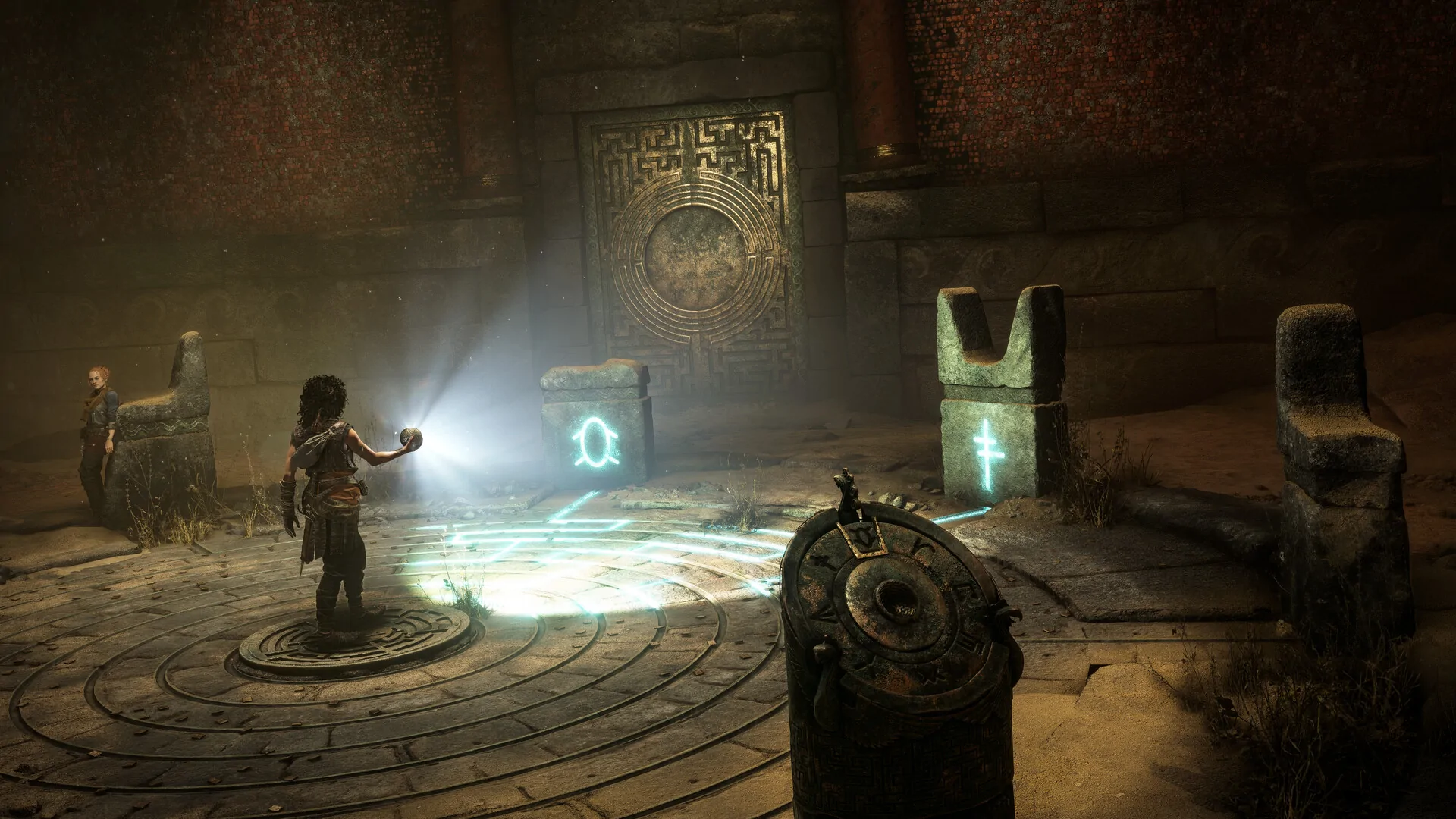
Resonance: A Plague Tale Legacy sends Sophia to the Minotaur’s Island, which the Steam description calls a maze of deadly trials, trails, and puzzles. Many enemies pursue her there to reclaim a mysterious treasure, and the creature behind the myth cannot be stopped — only hidden from, outsmarted, and outrun. This guide covers how exploring that island actually plays: how open it is, how traversal feels, and the habits that save you a replay.
Is the island open world?
No. Steam reviewers describe the story as linear, and the game is split into 14 chapters rather than one open map. Exploration means discovery inside a directed journey: side rooms, dead-end ledges, and alternate corners of each area, not free travel between regions. The places the story visits — the raiders’ camp in the Venice lagoon, Venice and its carnival, and the island itself across two time periods — are described on the locations guide.
Because the route is linear, the cost of missing something is a chapter replay through Story Select. The Story Select and cleanup guide explains what carries over and what does not.
How traversal feels
Some Steam reviews checked on August 28, 2026 complained about traversal interactions. They did not describe a consistent list of affected actions, so read them as feedback about how movement felt to those players rather than as a known bug. If an interaction seems unresponsive, check the on-screen prompt and your input settings first; it is usually a positioning issue rather than a hidden route.
If Sophia actually drops below the scenery, let the normal checkpoint transition finish before giving more inputs, and keep your existing save. The falling through the map guide walks through a safe recovery. The October 6 bug-fix update also lists collision fixes; the October 6 update guide has the full list.
Reading a new area
Three questions cover most new rooms:
- Is there an armed enemy? Combat rooms announce themselves with a person holding a weapon. Puzzle rooms announce themselves with architecture — a beam, a mirror, a brazier, a statue.
- Where can Sophia retreat? Note the nearest cover, height change, or doorway before a melee exchange starts.
- Is this a creature section? From Chapter 6 the creature hunts Sophia. It cannot be killed, so those scenes are about hiding and moving, not fighting.
The official combat language makes parry timing a core skill. In a new area, do not commit to a long attack string straight away: watch one enemy’s wind-up, parry, then decide whether a powerful strike is safe. If several pursuers arrive at once, use agility and terrain to split them. The combat guide covers the attack colour rule, and stealth or combat covers the creature chases.
Light, puzzles, and the sphere
Much of the island’s exploration runs through light puzzles solved with the stolen Minoan sphere. Light Splitting arrives in Chapter 4, Light Reveal from Chapter 5, and Light Concentrate in Daedalus’ Workshop in Chapter 10, after which light also works as a weapon. The Minoan sphere guide lists the puzzles worth knowing per chapter.
What to sweep before moving on
Exploration is where completion is won or lost. The game tracks four collectible counters — Blades, Artefacts, Charms, and Resonance Points — across its chapters, and one of them cannot be recovered later:
- Resonance Points save only at the next checkpoint, do not carry through Story Select, and cannot be farmed on a replay. Sweep dead ends and cliff trails as you go.
- Blades, Artefacts, and Charms count in Story Select after the credits, so a missed one is recoverable.
Two exploration achievements are missed by walking past rather than by difficulty: Sea you later! (say hello to the turtle) and Theater enthusiast (watch the entire puppet show at the carnival in Chapter 2). The collectibles by chapter guide has the per-chapter counts, and the missable achievements guide covers the rest.
A simple route note
If you are hunting a missed collectible or a stuck traversal spot, a short note per area makes a replay much faster. Record the chapter, a stable landmark (a ruin, statue, bridge, or shoreline), what the sphere changed if anything, which enemies were present, and where you could retreat. Write what you saw — “the patrol moved after the light changed” — before deciding why it happened. That habit keeps a replay focused and stops a one-off accident from turning into a false rule for the whole island.
Lore versus mechanics
The story takes place 15 years before A Plague Tale: Requiem, and Sophia’s island journey is tied to the Minotaur myth. Environmental details and artefacts tell that story, but a historical reference is not a puzzle solution. Keep lore and route notes separate; the story guide and Minotaur myth explainer cover the background.
Related pages
Sources and verification
Fact sources
| Status | Source | Used for | Checked |
|---|---|---|---|
| Steam feature | Steam store pageValve / Steam | App id 2713000, developer, publisher, release date, price, genres, categories, languages, screenshots, and the official Steam description. | |
| Official | Official Steam devblogs and FAQAsobo Studio / Focus Entertainment | First-party posts on the Steam news hub for App 2713000: the Resonance FAQ (platforms: "PC, Xbox Series X|S and PS5"), plus DEVBLOG #1 Sophia’s Story, #2 Anna Demetriou interview, #3 "Into The Myth", #4 Olivier Derivière interview. | |
| Official media | Steam official media galleryValve / Steam | Official screenshots, header art, and trailers published on the Steam store page. | |
| Steam community reports | Steam community reportsSteam players | Recent English player reviews and discussions. Completion time, chapter count, Story Select, persistence, structure, traversal, and performance observations are player reports rather than official specifications. |